Jewelry Consultation Question Capture
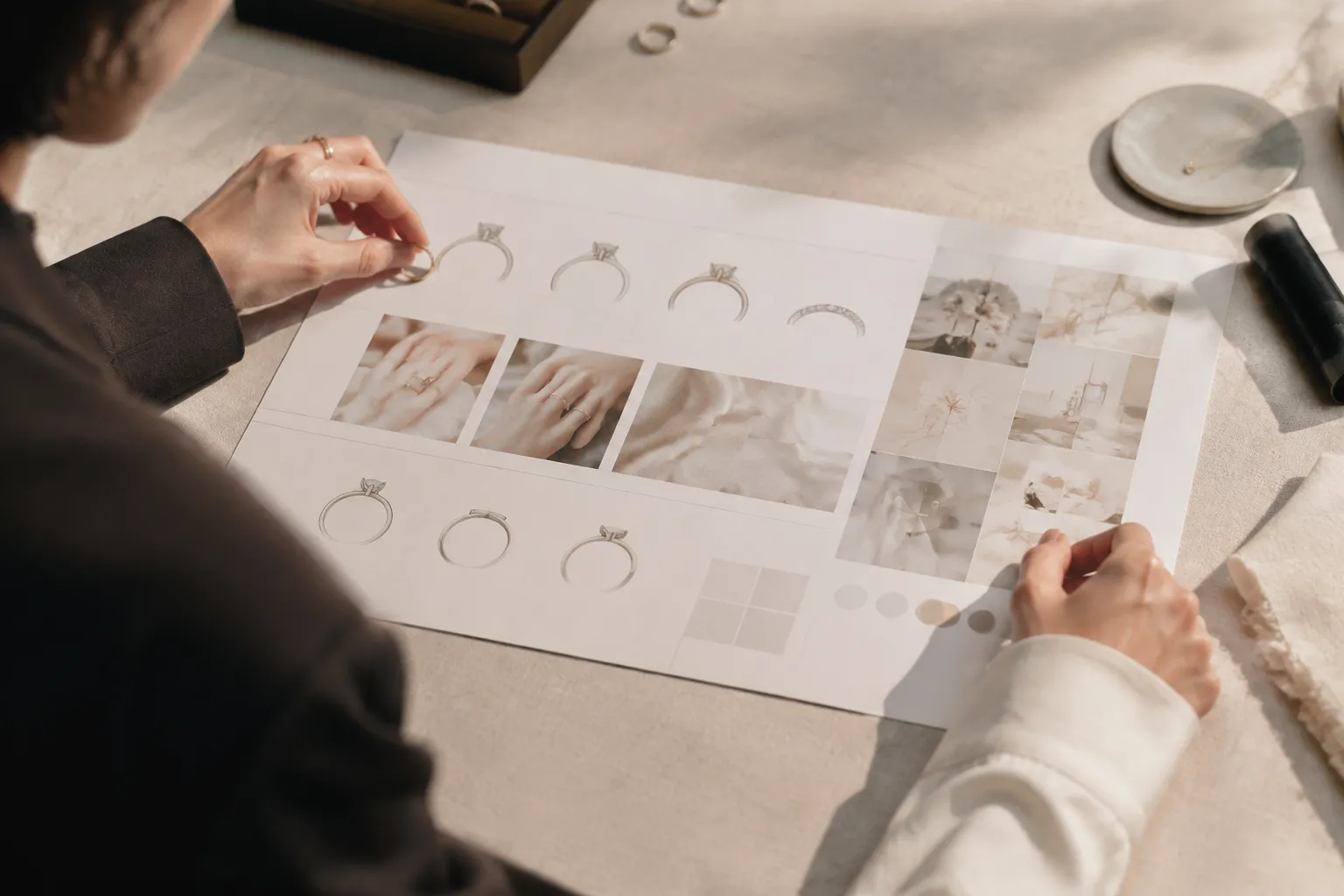
A jewelry consultation often starts with a useful feeling and an unusable adjective. “Delicate” may refer to a narrow shank, a smaller scale cue, fine-looking prongs, or a low-contrast finish. “Bold” could describe the stone shape, setting height, band width, or visual contrast.
“Vintage” may point to a halo, repeated surface detail, an ornamental gallery, or a period reference. “Minimal” may mean fewer visible elements, simpler geometry, or an uninterrupted silhouette. The first task is to turn that language into something two people can compare.
A preview can show visible form and design direction. It cannot establish stone identity, metal composition, exact dimensions, price, availability, licensing, fit, durability, hallmarking, CAD status, or manufacturing feasibility. Those questions belong to the relevant source, supplier, jeweler, CAD specialist, workshop, or rights-holder.
More specific pages
These pages continue the topic in smaller, more specific directions.
What Jewelry Consultation Questions Need to Capture
A useful question connects four parts:
- The preference the client expresses.
- The visible design cue that may represent it.
- The choice or trade-off affected by that cue.
- The person or source that must confirm the unresolved detail.
“I want a delicate ring” records intent, but leaves several interpretations open. A stronger consultation question asks whether the visual lightness should come from a narrow shank, smaller central form, lower-looking profile, reduced surrounding detail, or a combination.
It should also ask whether the preference concerns appearance only or carries an unstated expectation about daily wear, scale, or construction. The brief records that distinction; the appropriate reviewer confirms any technical consequence.
Research on precious-jewelry evaluation has described differences between subjective and objective criteria, with the weight of particular criteria varying by product knowledge and familiarity. For this page, the practical use is limited: record the visual preference clearly, then route factual questions to the responsible reviewer.
Translate Preference Words Into Design Cues
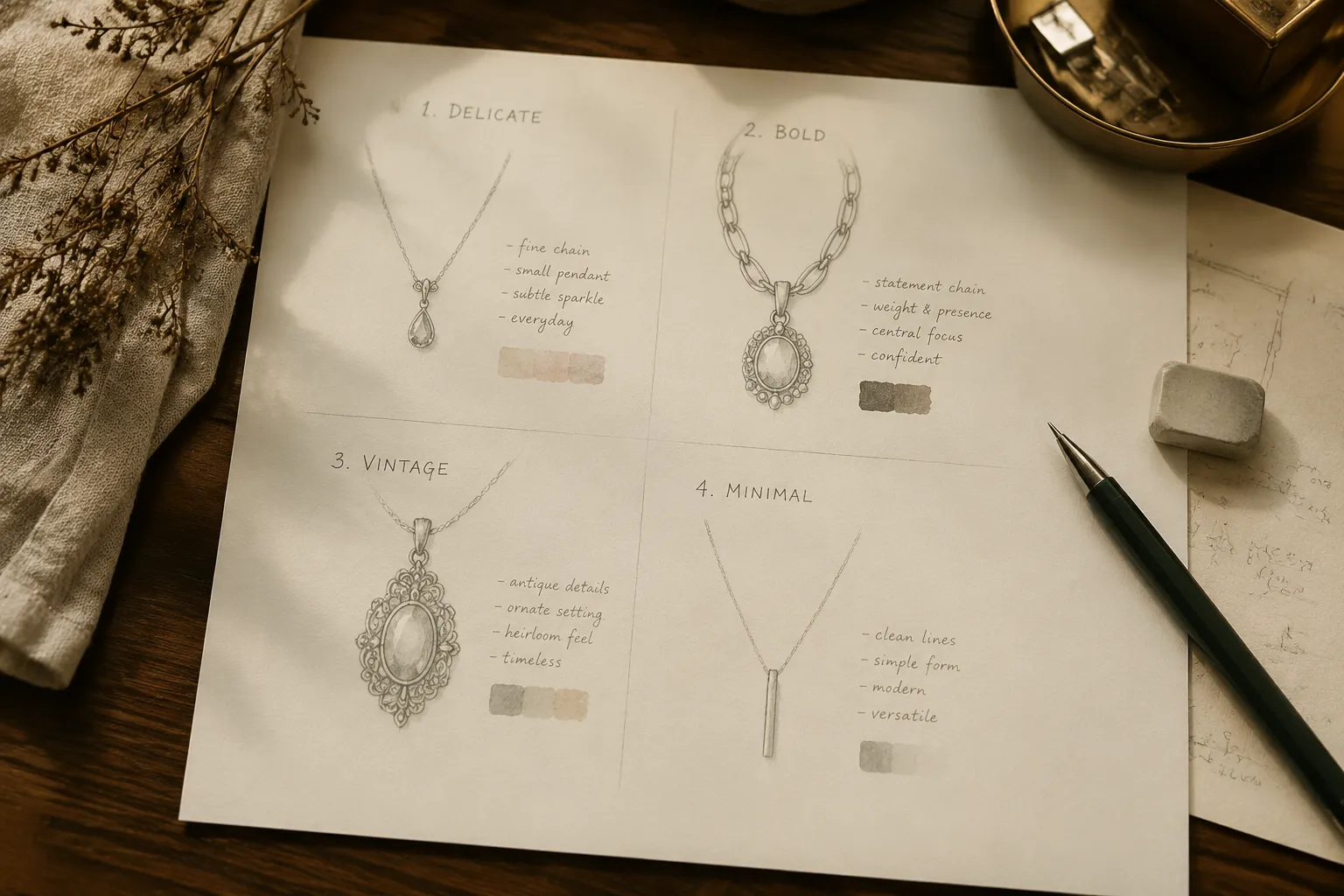
Delicate: scale, density, and profile
A delicate direction could appear through a narrow-looking shank, a smaller central form, fine-looking prongs, a restrained halo, a slim chain, or greater open space around the main feature. These are visual observations, not measurements.
Two designs can have similar apparent dimensions but different density. A continuous halo may read less delicate than a single central form, even when both views use a similar scale cue. Ask whether the client wants less surrounding detail or a smaller overall silhouette. The first answer changes the halo, gallery, or setting arrangement; the second changes the central form and surrounding structure.
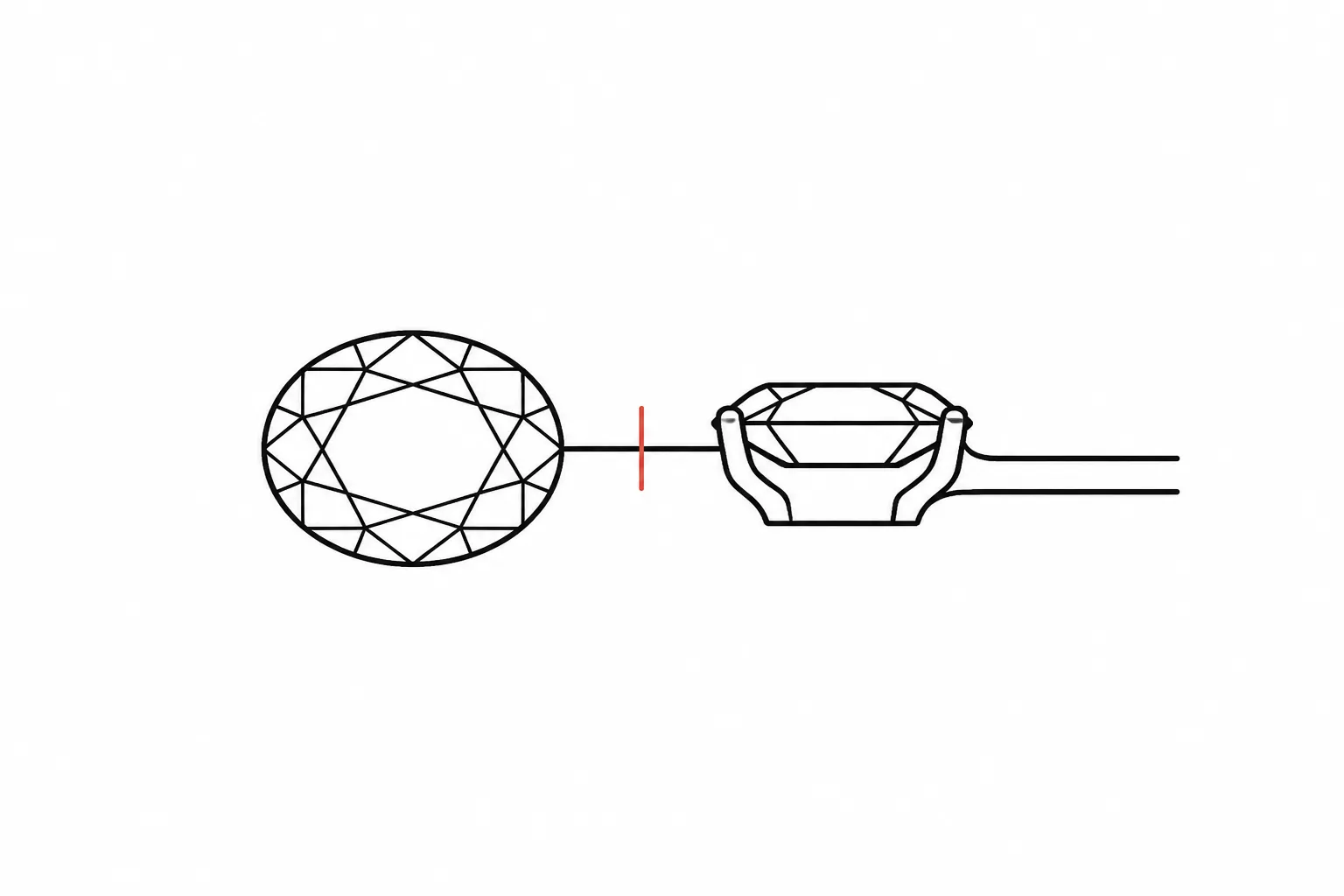
Front and side views may also disagree. A front view can appear delicate while the side view suggests a taller setting. Ask whether the low-profile impression should continue from the side, and whether the gallery should remain open or visually concealed. The preview shows the intended profile; construction still requires review.
Bold: emphasis, concentration, and height
Bold does not necessarily mean large. It may come from contrast, a strong stone shape, a pronounced halo, a broad shank, a visible bezel, or a higher-looking profile. The controlling question is which feature should carry the emphasis.
Compare a substantial central form with a restrained band against a modest central form with a wide, sculptural shank. Both could read as bold, but the first concentrates attention at the top while the second gives weight to the full silhouette.
Ask whether the emphasis should be visible from the front, side, or both. Also ask whether the gallery belongs to the visible character, whether the band should remain quiet, and whether the higher-looking profile is intentional or simply an artifact of the view. A useful revision note names the change: “Increase the visual weight of the shank while keeping the central setting unchanged.”
Vintage: source cue and form cue
“Vintage” is a broad style direction, so it needs both a visible cue and a source record. Possible cues include a halo, repeated surface detail, an ornamental gallery, a contrast between central and surrounding forms, or a profile associated with an earlier design period.
These cues remain editorial interpretation unless the brief records a specific source, period, or design reference. A vintage-looking surface does not establish age, provenance, authenticity, or historical attribution.
Ask which feature creates the period direction and whether the reference concerns ornament, silhouette, setting, finish, or proportion. If an image is being used as a reference, record its source page and stated reuse terms. Attribution alone does not establish permission to reuse an image or reproduce a design.
Minimal: reduction, continuity, and quiet emphasis
Minimal can describe a single dominant form, a plain-looking shank, limited contrast, or a clean transition between setting and band. A pendant may rely on one stone shape and a restrained chain; earrings may use a simple outline or a small number of visible components.
Fewer elements and lower visual emphasis are different choices. Several components can still appear minimal when their shape, finish, and proportion remain closely aligned. Compare a single central form with a plain shank against a small halo whose repeated details stay quiet. The first reduces the number of elements; the second retains structure while limiting contrast.
Ask which meaning the client intends before changing the central form. A precise revision note might read: “Remove the visible secondary border before changing the central stone shape.” That sequence protects the primary preference from being diluted by several simultaneous edits.
Use Pairwise Comparison to Find the Controlling Variable
“Which do you like?” is too broad when two concepts vary in stone shape, band width, setting, and finish at the same time. A comparison becomes useful when it names what differs and asks one decision at a time.
| Comparison | Controlling cue | Follow-up question |
|---|---|---|
| Narrow shank versus wider shank | Band visual weight | Is delicacy coming from width or from the central form? |
| Halo versus no halo | Surrounding density | Does the border support the vintage direction or weaken the minimal one? |
| Low-looking versus taller-looking profile | Side silhouette | Is the height intentional, hypothetical, or awaiting review? |
| Plain versus contrasting finish | Surface emphasis | Should the design read through geometry or surface treatment? |
| Single form versus clustered elements | Visual concentration | Should emphasis remain central or spread across the piece? |
The board records preference direction. It does not replace measurement, sourcing, quotation, CAD development, or workshop review. Keep assumptions beside the comparison so a visual choice is not mistaken for a confirmed specification.
Separate the Preview, Brief, and Handoff
What the preview shows
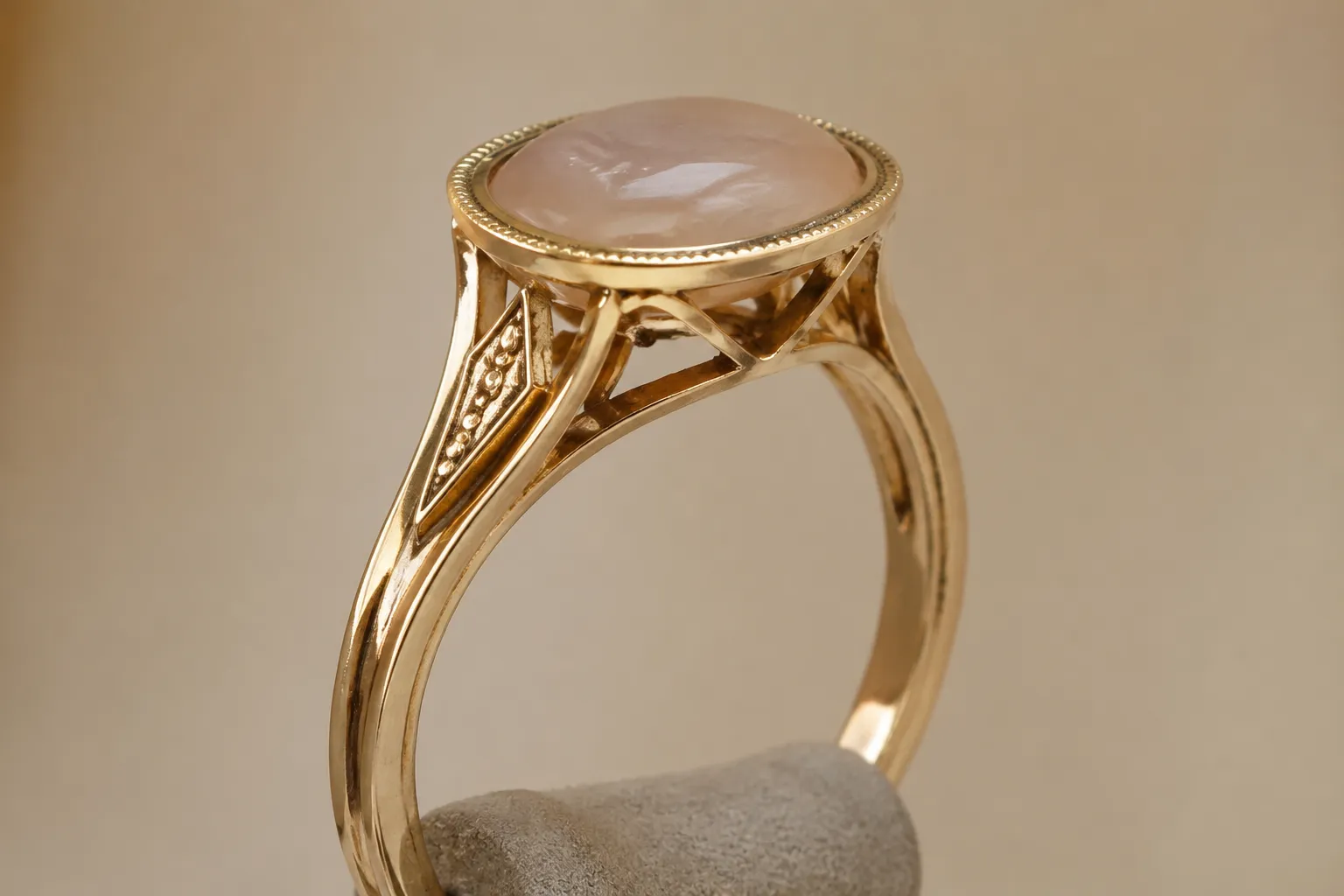
- Front, side, or angled silhouette.
- The apparent relationship between setting and shank.
- Stone shape as depicted.
- Visible prongs, bezel, halo, gallery, chain, or clasp.
- Relative visual density, contrast, and differences between concept views.
Use bounded language such as “the preview shows” and “this view suggests.” A render can communicate direction without proving material, scale, or construction.
What the brief records
- The client's preference words and selected concept direction.
- The rejected or unresolved alternative.
- Assumed materials, dimensions, prices, or availability.
- Revision notes and approval status for the current concept view.
- Source references and recorded rights information.
Hypothetical specifications stay labeled as assumptions. A displayed amount is an editorial placeholder unless a suitable record supports it.
What the responsible reviewer confirms
Different questions pass to different owners. A jeweler, CAD specialist, supplier, workshop, or rights-holder may need to address material information, measurements, fit-related requirements, setting feasibility, quotation, durability, hallmarking, CAD status, image use, attribution, licensing, or permission terms.
The owner follows the question. The visual review can identify an unresolved issue, but it cannot turn a concept preview into production proof.
Jewelry Consultation Handoff Questions
Visual direction
- Which preference word is being translated?
- Which visible cue carries that meaning?
- Is the cue visible in every required view?
- Which alternative was compared?
- What revision would change the direction without changing unrelated elements?
Assumptions and records
- Which stone, metal, finish, or dimension is hypothetical?
- Has the source of supplied material information been recorded?
- Is displayed scale a visual cue or a confirmed measurement?
- Is a quoted amount documented, or is it an editorial placeholder?
- Is availability recorded by a supplier, or merely suggested by the concept?
Approval status
- Is the client approving visual direction only?
- Which views have been reviewed?
- Which details remain unresolved?
- Does the current image represent a concept preview rather than a CAD or workshop document?
- What must be confirmed before sourcing, quotation, CAD development, or production handoff?
Common Mix-Ups
Delicate and minimal
Delicate concerns apparent scale or lightness. Minimal concerns reduction, continuity, or limited visual complexity. A design can be minimal but visually substantial, or delicate while carrying considerable ornament.
Bold and ornate
Bold concerns emphasis. Ornate concerns the amount or character of detail. A broad plain shank may be bold without being ornate, while a small detailed halo may be ornate without appearing bold.
Vintage and old
Vintage can describe a style direction. It does not establish that a piece is old, authentic, historically attributable, or made with period materials.
Visual proportion and confirmed measurement
A preview can communicate proportion. Exact dimensions belong in the brief only when supplied or confirmed through the appropriate technical process.
Source reference and reuse permission
A reference image can shape concept direction while its reuse terms remain unresolved. Record the source, license, permission record, or rights-holder communication separately from the visual preference.
A Compact Review Record
| Field | Record |
|---|---|
| Client wording | “Delicate,” “bold,” “vintage,” or “minimal” |
| Visible cue | Shank, setting, stone shape, gallery, clasp, chain, or finish |
| Compared option | The alternative that clarifies the decision |
| Current direction | The concept selected for further review |
| Assumption | Hypothetical material, dimension, price, or availability |
| Unresolved question | The fact the preview cannot establish |
| Confirmation owner | Jeweler, CAD specialist, supplier, workshop, source, or rights-holder |
| Approval status | Direction reviewed, detail unresolved, or awaiting confirmation |
Use one row for each major preference or unresolved choice. That keeps a consultation readable when several pieces belong to one ring, pendant, earring, or collection direction.
Before the Next Handoff
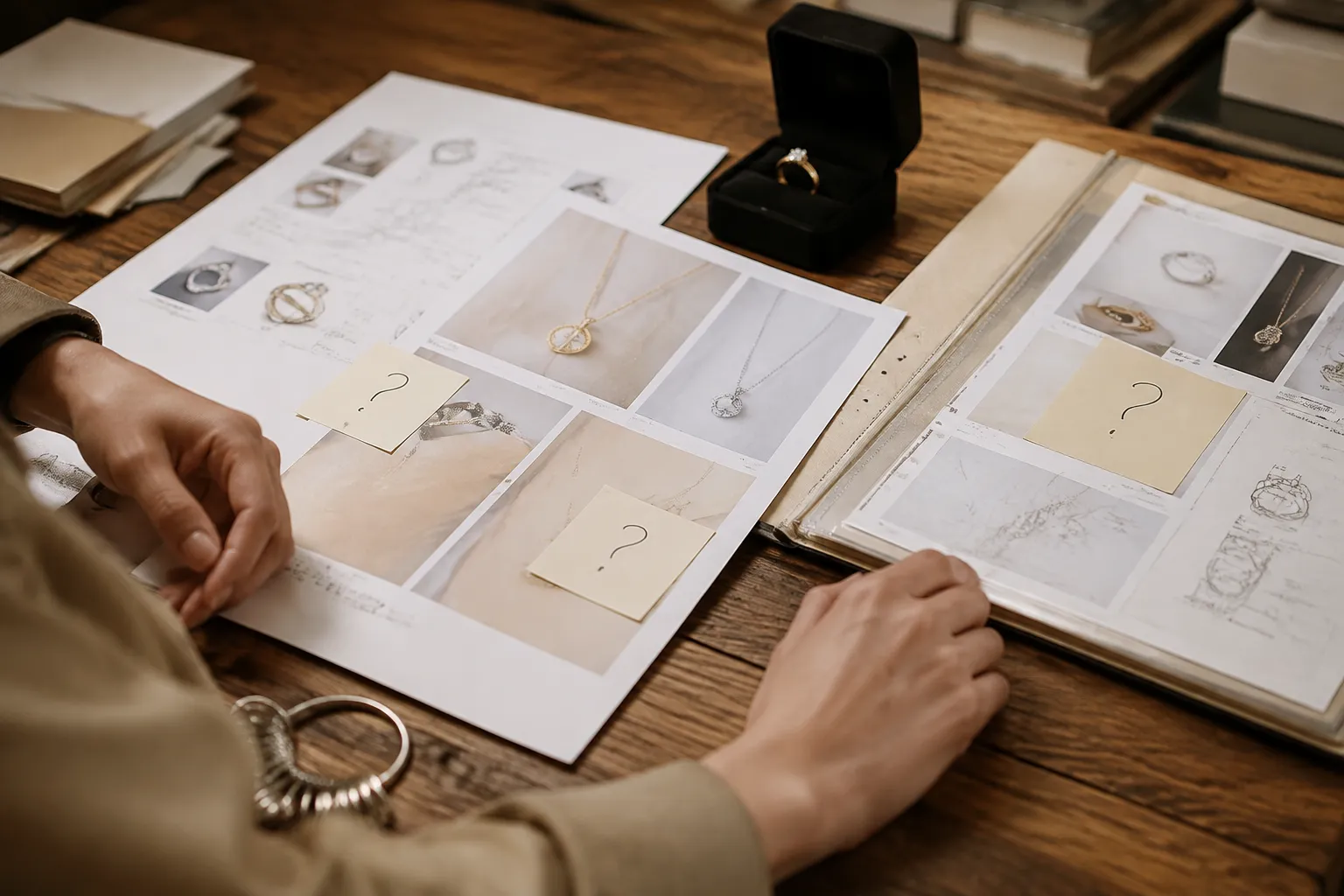
- What does the jewelry preview show clearly?
- Which interpretation is editorial rather than supplied?
- Which design cue separates the two plausible options?
- Which assumption could change the quotation or sourcing path?
- Which question requires a jeweler, supplier, CAD specialist, workshop, or rights-holder?
- Has the current view been approved as a concept direction only?
- What should be revised before the next comparison?
A strong consultation question makes the visual decision legible, records what remains unresolved, and sends each open fact to its responsible owner. Label the view, attach the source record, and carry the remaining question into the next review.
Sources
- Consumers' product evaluation: a study of the primary evaluative criteria in the precious jewellery market in the UK
- Aesthetic evolutionary algorithm for fractal-based user-centered jewelry design | AI EDAM | Cambridge Core
- Jeweler-in-the-loop: personalized alloy color optimization via preference-based BO