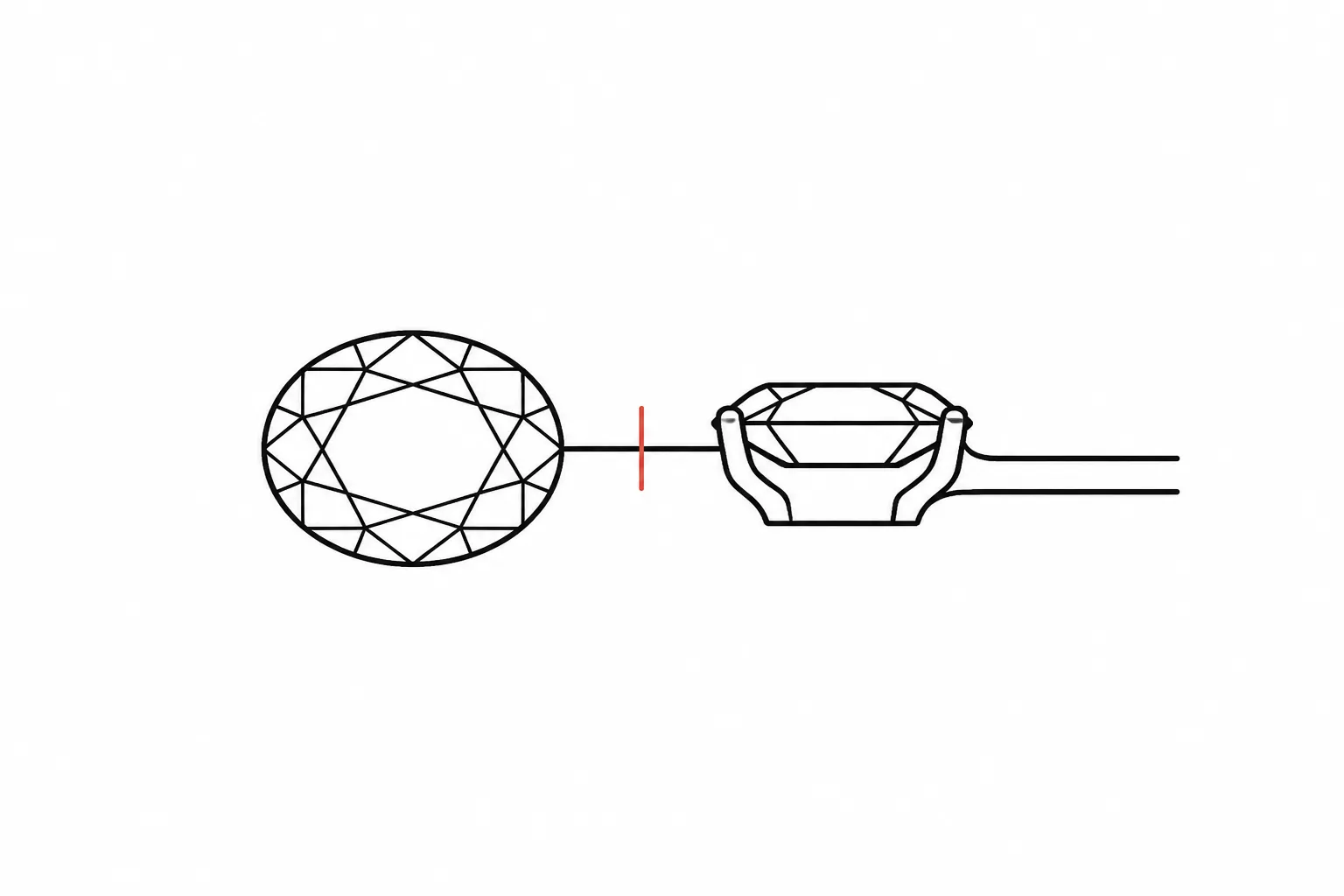
Reference Cues in Jewelry Briefs
A jewelry design mood board can settle a visual direction without settling the finished piece. It may suggest a stone shape, halo-like outline, warm color, narrow shank, or textured surface. It does not establish material identity, exact scale, price, availability, durability, fit, provenance, reuse permission, or production feasibility.
The useful editorial task is to turn those cues into a clearly labeled design brief. Each note should show whether it comes from the image, a supplied source record, an editorial interpretation, or a later review by a supplier, CAD specialist, jeweler, rights holder, or workshop.
The strongest brief makes unresolved questions easier to assign.
More specific pages
These pages continue the topic in smaller, more specific directions.
What the Image Can Settle
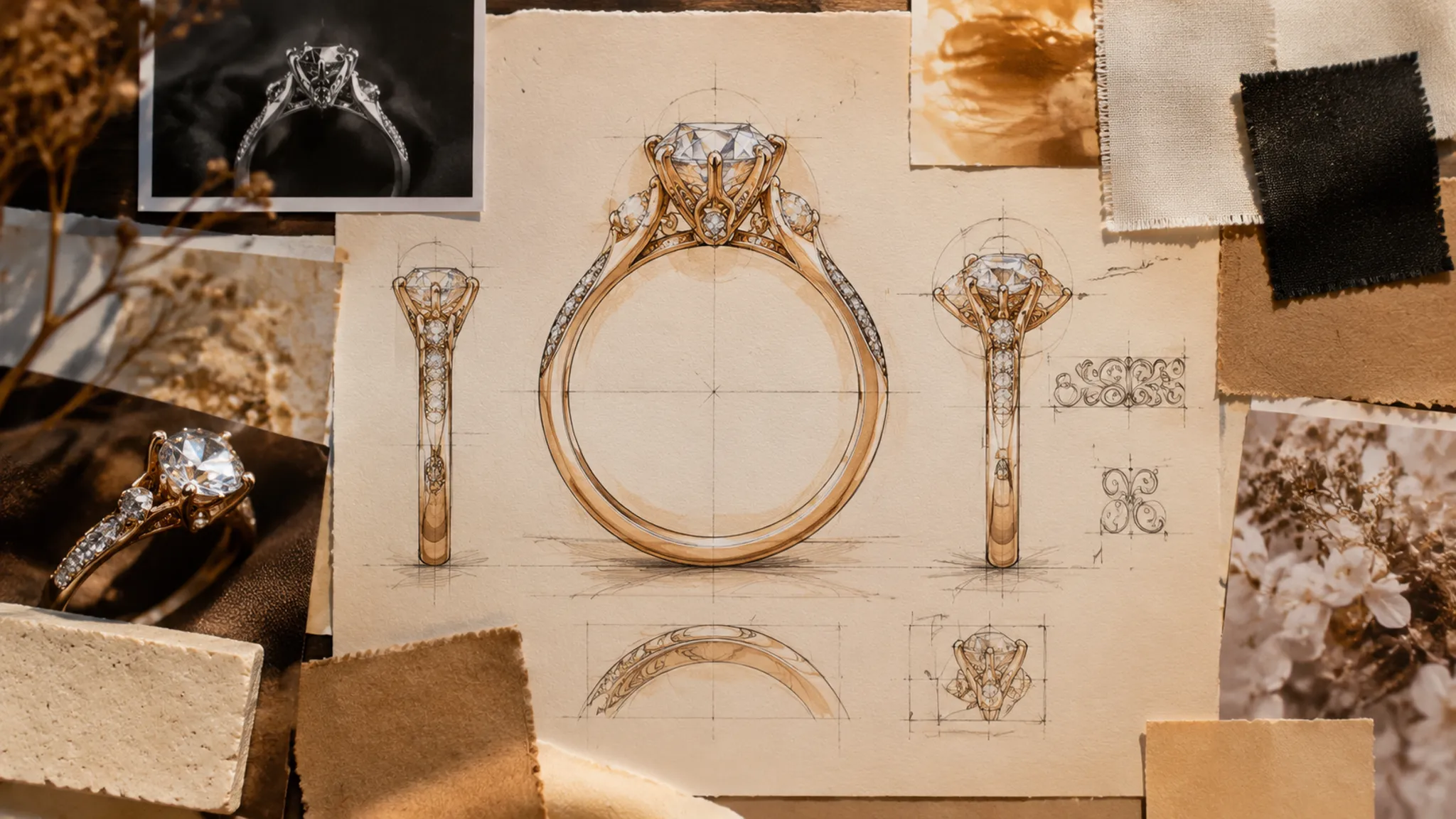
A mood board becomes useful when it organizes visual direction around a decision. It can compare two ring silhouettes, preserve the profile of a pendant, or show how a collection might relate through proportion, color, or repeated form.
A jewelry reference image may show:
- the apparent object type, such as a ring, pendant, earring, brooch, or bracelet
- the visible outline, silhouette, and balance of the piece
- the apparent stone shape or surrounding arrangement
- visible prongs, a bezel-like edge, a halo-like frame, a gallery, clasp, chain, or attachment point
- surface appearance, such as bright, satin, brushed, or textured treatment
- color relationships among the metal-looking surface, stones, and background
- relative proportions within the frame
- the angle, lighting, crop, and visible side of the object
These are visual observations. They can guide a conversation, but they should remain separate from confirmed specifications. “The reference shows a low, rounded center with a surrounding row of lighter elements” records what is visible. “The design uses a low-profile diamond halo setting” adds a stone identity, a construction reading, and a structural conclusion that the image may not establish.
Annotate a Jewelry Reference Image for a Design Brief
Annotation works best when it moves from visible feature to design consequence, then to the person responsible for the open question. Every note should answer three things:
- What can be seen?
- What design choice might it represent?
- Who needs to confirm the unresolved detail?
This creates a working layer between inspiration and production information. It also prevents a single attractive view from carrying more meaning than it can support.
Start With the Object and View
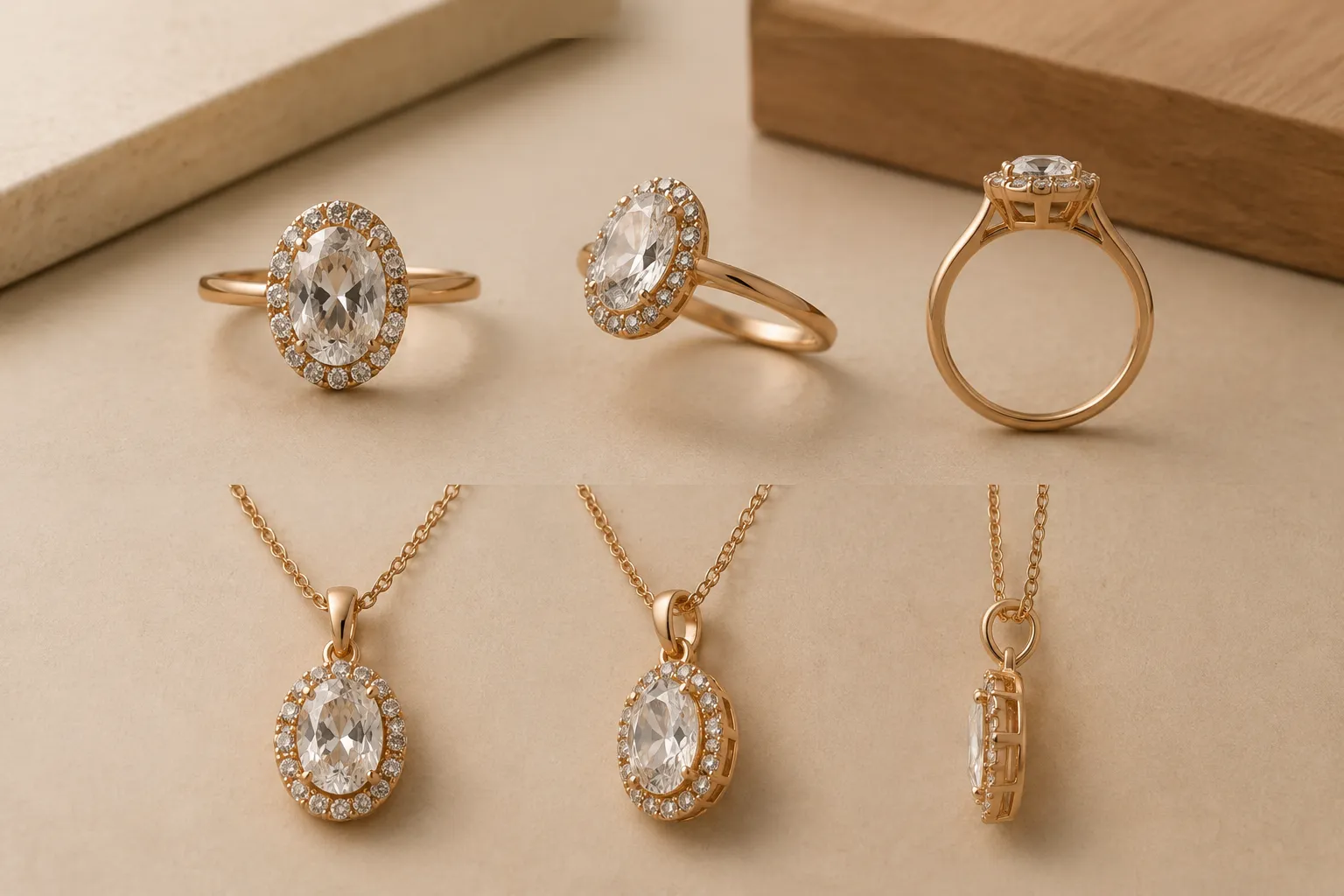
Record whether the image shows a front view, side view, angled view, detail crop, worn view, or assembled collection. A front view may make the silhouette easy to compare while hiding the gallery, clasp, underside, or attachment points. A worn image can offer a useful scale cue while leaving exact dimensions unresolved.
A close crop may reveal surface treatment but provide little sense of total proportion. A compact note could read:
- Object: ring
- View: angled front view
- Visible: broad upper outline and central setting area
- Hidden: lower shank profile and underside
- Next owner: CAD or workshop review for the complete profile
Trace the Silhouette Before the Highlights
The outer contour often carries more dependable design information than reflective highlights or apparent material color. Trace the center, shoulders, band, chain, or hanging element before interpreting surface effects.
Compare these two descriptions:
- A ring with a broad, softened outline and a narrow lower band.
- A ring with a broad upper plate that gradually narrows toward the base.
The first emphasizes proportion. The second raises a question about how the structure transitions around the finger. They should not lead to the same revision note.
Useful observation language includes:
- rounded outer profile
- open negative space beneath the center
- tapered shoulder line
- repeated pointed elements around the perimeter
- straight-sided pendant body
- irregular contour with visible asymmetrical balance
If the image does not show the complete perimeter, mark the missing area. Do not complete it from assumption.
Separate Form From Interpretation
An image may support the observation that “the center appears oval.” It may also support the interpretation that the elongated proportion creates vertical emphasis against angular shoulders. It cannot establish the gemstone type or predict whether a selected stone will behave visually in the same way.
| Brief field | Example entry |
|---|---|
| Visual observation | The center appears oval and elongated. |
| Concept direction | Keep the vertical proportion for the next comparison view. |
| Editorial interpretation | The proportion could give the design a softer contrast against angular shoulders. |
| Assumption | A similar stone shape may be explored. |
| Confirmation needed | Supplier to review available stones and stated dimensions. |
Strong reflections can make a surface appear more polished, a stone more transparent, or a metal warmer than the supplied record supports. Record the appearance first and keep the material question open.
Use Five Labels to Keep the Brief Clear
A jewelry design brief should preserve the difference between direction and specification. Technical drawing and design documentation commonly divide information among object description, materials, measurements, process, date, and responsibility. At the concept stage, several of those fields may remain provisional.
Visible Cue
Record what the image shows without adding a technical conclusion.
- A repeated light-dark pattern appears around the outer edge.
- The pendant has a long central axis.
- The ring shoulders appear to rise toward the center.
- The earrings appear to use a matched pair of rounded forms.
Concept Direction
Record the preference that should carry into the next comparison.
- Keep the elongated pendant proportion.
- Compare a closed surrounding frame with a more open version.
- Preserve the contrast between a smooth center and textured outer surface.
- Explore a lower visual profile for the ring.
Source Record
Record information supplied by the image owner, seller, designer, catalogue, or another identified source. Do not fill this field from visual guesswork.
- Source page describes the piece as silver.
- Supplied record names the stone shape.
- Image owner has provided attribution terms.
- No material record was supplied.
A source page or attribution line does not, by itself, establish permission to reuse an image. Rights status needs a relevant licence term, permission record, or rights-holder communication.
Editorial Interpretation
Explain what the visible cue could do within the concept. Use “could,” “appears,” and “suggests” when the image supports interpretation rather than fact.
- The narrow shank makes the upper structure appear more dominant.
- The repeated perimeter elements create a more formal rhythm.
- The side view suggests that the gallery may be visually important.
- The warm color direction could belong to the collection language rather than a confirmed metal choice.
Confirmation Owner
Assign the next question to the role that can answer it.
- Supplier or jeweler: available stone shapes, stated materials, and current sourcing details
- CAD specialist: complete geometry, proportions, and additional views
- Workshop: construction questions, process constraints, joining, setting, and finishing review
- Rights holder or source owner: reuse permission and attribution terms
Compare Reference Cues by Decision
Two images can look similar while leading to different briefs. Compare the cue that changes the next decision, rather than listing every visible feature with equal weight.
Stone Shape Versus Stone Identity
A visible outline may suggest a round, oval, pear, emerald, or marquise shape. That observation can guide a concept comparison. It does not establish gemstone type, quality, treatment, provenance, or availability.
Record the visible shape, whether it is central or repeated, its apparent relationship to the setting, whether a source record confirms it, and which alternatives should be compared. The supplier or jeweler still needs to confirm suitable options for the intended direction.
Setting Appearance Versus Construction
A row of bright elements may appear to form a halo. A dark edge may suggest a bezel. Small projections may look like prongs. These terms can describe visible direction, but the image may not show how the setting is built.
Use: “The preview suggests a surrounding frame with regularly spaced points.” Then add: “CAD or workshop review is needed to determine whether the intended construction is a halo, bezel, prong arrangement, or another approach.”
Apparent Scale Versus Measured Scale
A worn image can show whether a piece appears delicate, compact, broad, or visually dominant. Perspective, cropping, camera distance, and the wearer’s body can alter that impression.
- Appears small relative to the visible ear.
- Looks broad across the finger.
- Has a long vertical proportion in the worn view.
- Exact dimensions remain unresolved.
Do not turn the image into a measurement. Dimensions should come from a supplied record or a later measurement process.
Color Direction Versus Metal Specification
A yellow, white, gray, or rose-colored surface can establish a color direction. Lighting and reflection may alter its appearance. The image does not confirm metal type, purity, weight, finish performance, or hallmarking.
A better entry would be:
- Metal color direction: warm yellow
- Surface appearance: bright in the front view
- Metal specification: unresolved
- Confirmation owner: supplier or jeweler
The same rule applies to stones. A bright or colored area may be recorded as a color cue without naming a gemstone.
Keep Rights Status Beside the Reference
A rights-aware design brief treats the image source as a separate record. Visual usefulness and reuse permission are different questions.
For each reference image, record:
- source location or source name
- date collected
- image owner, when identified
- permission or licence record, when supplied
- required attribution
- permitted use, if stated
- whether the image is intended for private discussion, internal comparison, presentation, or public publication
- current rights status and the person responsible for resolving it
If no rights-holder record or permission communication is available, mark the status unresolved. Do not infer permission from a search result, catalogue appearance, attribution line, mood board, or platform page.
A concise field is clearer than a vague note:
Rights status: source identified; reuse terms not recorded; do not publish the image until reviewed.
That record describes the status of the reference. It does not judge the artistic value of the image.
Track the Later Handoffs Separately
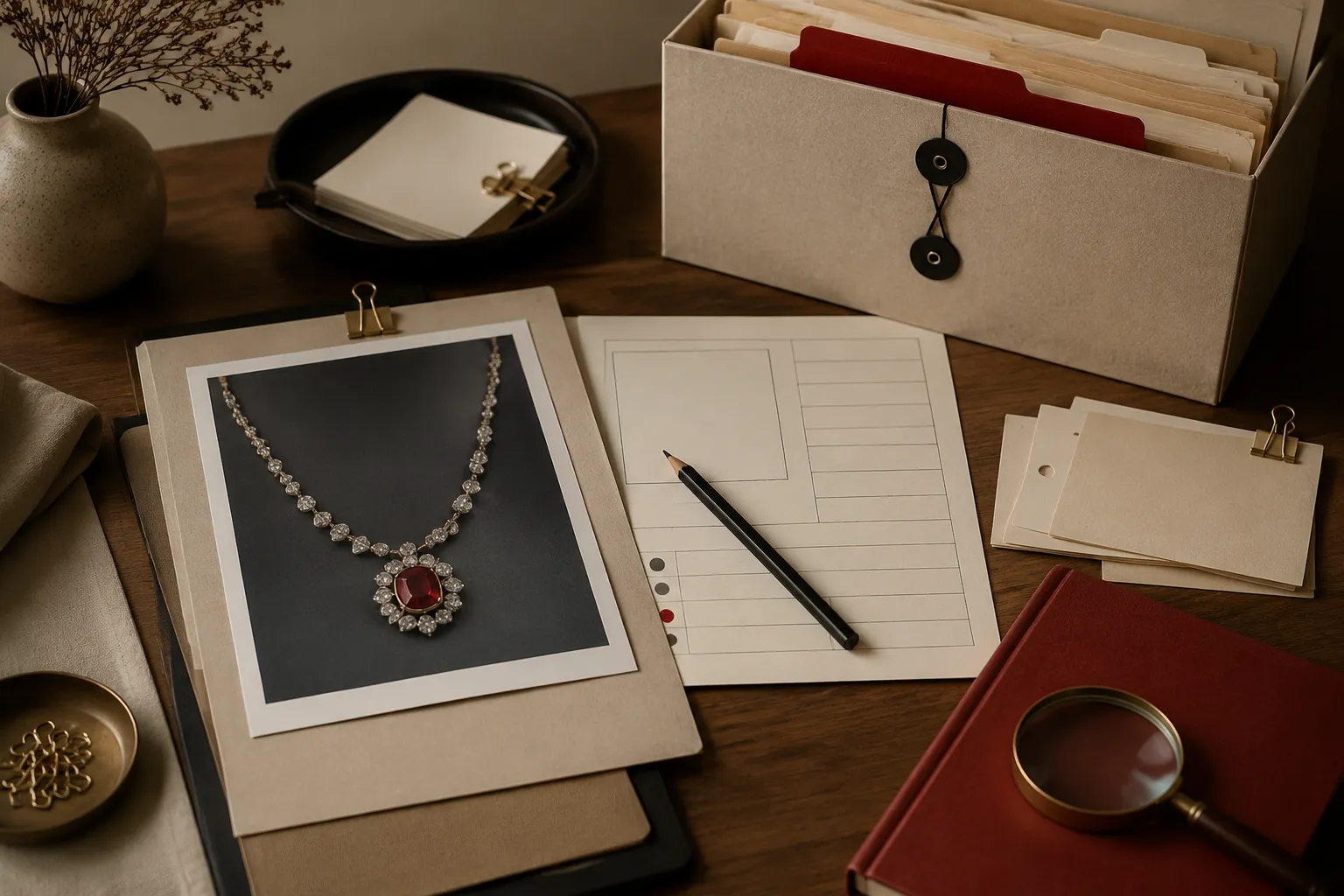
One realistic preview can appear to contain every later decision. Keeping sourcing, measurement, quotation, CAD, and workshop fields independent prevents that compression.
Jewelry Sourcing Details
Record possible stone shape, preferred color direction, possible metal color, number of visible elements, supplied material descriptions, and unresolved availability questions as assumptions. A supplier or jeweler must confirm current options and stated specifications.
Jewelry Measurement Details
Record relative width, apparent height, band or chain relationship, visible scale cues, and areas hidden by angle or cropping. Leave exact dimensions, ring size, thickness, weight, and fit to the appropriate measurement process.
Jewelry Quotation Details
A visual direction can support a comparison between simpler and more elaborate concepts. It cannot establish a price. Quote-related fields should identify open variables such as material choice, stone selection, dimensions, finish, process, and revision scope.
Price: unresolved until materials, measurements, process, and scope assumptions are reviewed.
Jewelry CAD Details
A concept preview can identify the views that are missing and the proportions that need comparison. Record required additional views, hidden areas, symmetry or asymmetry to preserve, profile questions, scale assumptions, and decorative details that have not yet been confirmed as structural.
CAD development remains a separate stage. A realistic render is not a final CAD drawing or a production document.
Workshop Confirmation Details
The workshop needs a brief that exposes uncertainty rather than concealing it. Route questions about construction, process, comfort, joining, setting, finishing, and feasibility to workshop review.
- Which visible features need a structural alternative?
- Which dimensions affect comfort or proportion?
- Which assumptions change the process?
- Which details should be simplified or tested?
- Which views are needed before the next production decision?
Research on CAD and jewelry production describes a recurring handoff problem: practical making knowledge may remain incomplete when a design moves between people and systems. Clear notes reduce ambiguity, but they do not replace the review owned by the next stage.
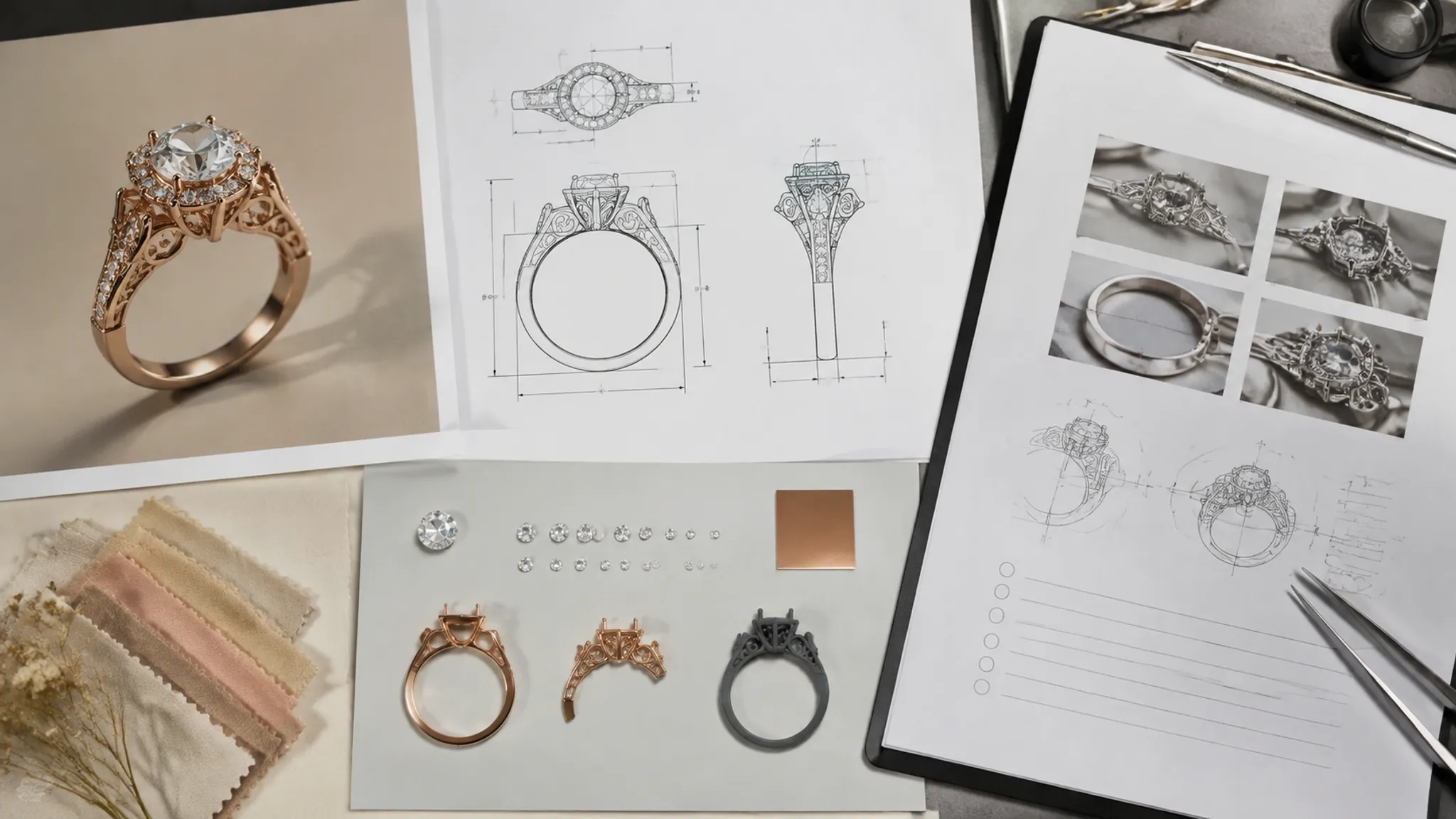
Worked Reference-Image Review
Consider a hypothetical ring image with an elongated central shape, a surrounding border, rising shoulders, and a warm reflective surface. The following record keeps visual direction separate from later confirmation.
Visible Observations
- The center appears elongated.
- A surrounding border is visible from the front.
- The shoulders rise toward the upper structure.
- The surface appears warm and reflective.
- The lower shank is partly hidden.
Concept Direction
- Compare the elongated center with a round alternative.
- Keep the rising shoulder profile.
- Test a lighter surrounding frame.
- Retain the warm color direction for the next preview.
Unresolved Assumptions
- stone identity and source
- metal type and stated composition
- exact dimensions, ring size, and fit
- setting construction
- final surface finish
- price and availability
Revision Notes
- Add a side view showing the gallery.
- Add a scale cue or measured dimension from a supplied record.
- Show whether the lower shank remains narrow around the finger.
- Mark which elements are decorative references and which are intended design features.
Handoff
- Supplier or jeweler: review material and stone options.
- CAD owner: develop complete views from the selected direction.
- Workshop: review construction after the geometry is defined.
- Rights owner: confirm whether the reference may be reused in the presentation.
The record keeps the image useful without allowing its visual confidence to become production certainty.
Common Misunderstandings
Realism Is Treated as Evidence
Reflective surfaces, detailed shadows, and close cropping can make a concept appear settled. They do not confirm the underlying material, dimensions, or construction.
A Source Is Treated as Permission
A source record can identify where an image came from. It does not automatically grant reuse rights.
A Visual Label Is Treated as a Material Record
“Gold-colored” is a visual description. It is not the same as a confirmed metal specification.
A Front View Is Treated as the Complete Object
The front may hide thickness, underside geometry, clasp details, gallery structure, and attachment points.
A Brief Is Treated as a Quotation
A brief organizes choices and questions. Price remains open until relevant materials, measurements, process, and scope are reviewed.
Concept Direction Is Treated as Production Approval
A selected mood board image can show the preferred direction. It does not confirm final construction or feasibility.
Compact Handoff Record
Use one record when the mood board moves into a consultation or revision round:
- reference ID
- object type and view shown
- visible cues
- concept direction
- editorial interpretation
- supplied source information
- assumptions
- missing views or scale cues
- rights status
- approval status
- open sourcing, measurement, quotation, CAD, and workshop questions
- responsible reviewer and revision date
Approval status should describe the concept direction, not production. For example:
Direction selected for further review; materials, dimensions, rights, quotation, CAD, and workshop questions remain unresolved.
FAQ
What should a jewelry reference image show in a design brief?
It should show a visual direction that can be discussed, compared, and annotated. Record the object type, view, silhouette, setting appearance, color direction, surface cues, and hidden areas.
Can a mood board confirm the metal or gemstone?
No. It can suggest a color, shape, or surface direction. Material identity and stone details require a supplied source record or review by the responsible jeweler or supplier.
How do I annotate a jewelry reference image without overclaiming?
Separate visual observations from interpretations and assumptions. Mark each unresolved detail with the person responsible for confirming it.
Does attribution give permission to reuse an image?
No. Attribution and permission are separate records. Review the relevant licence, permission communication, or rights-holder terms before reuse or publication.
When should a jewelry reference become a CAD request?
When the concept direction is clear enough to compare, while the brief still identifies missing views, proportions, and hidden areas requiring technical development. Include assumptions rather than presenting them as facts.
What belongs in the workshop handoff?
Include the selected direction, visible form cues, unresolved construction questions, measurement assumptions, requested views, and approval status. The workshop still needs to confirm feasibility and production details.
Final Decision
A jewelry design mood board is most useful as a controlled reference, not an accidental specification. Use it to compare silhouettes, setting directions, proportions, color cues, and surface language.
Record what the image shows, what the source record states, and what your interpretation suggests. Keep rights status separate. Route sourcing, measurement, quotation, CAD, and workshop questions to the appropriate reviewer.
The handoff is ready for the next decision when the preferred direction is clear, the unresolved details are named, and no visual assumption is presented as confirmed production or rights information.
Sources
- O Desenho Técnico aplicado ao conteúdo da disciplina de Design de Joias e Bijuterias
- The challenge of the codification of tacit knowledge in designing and making: a case study of CAD systems in the Hong Kong jewellery industry
- Automatic Identification and Description of Jewelry Through Computer Vision and Neural Networks for Translators and Interpreters